A designer costs $150 to $500 an hour.
Most of that hour is not talent. It is a set of visual rules that are
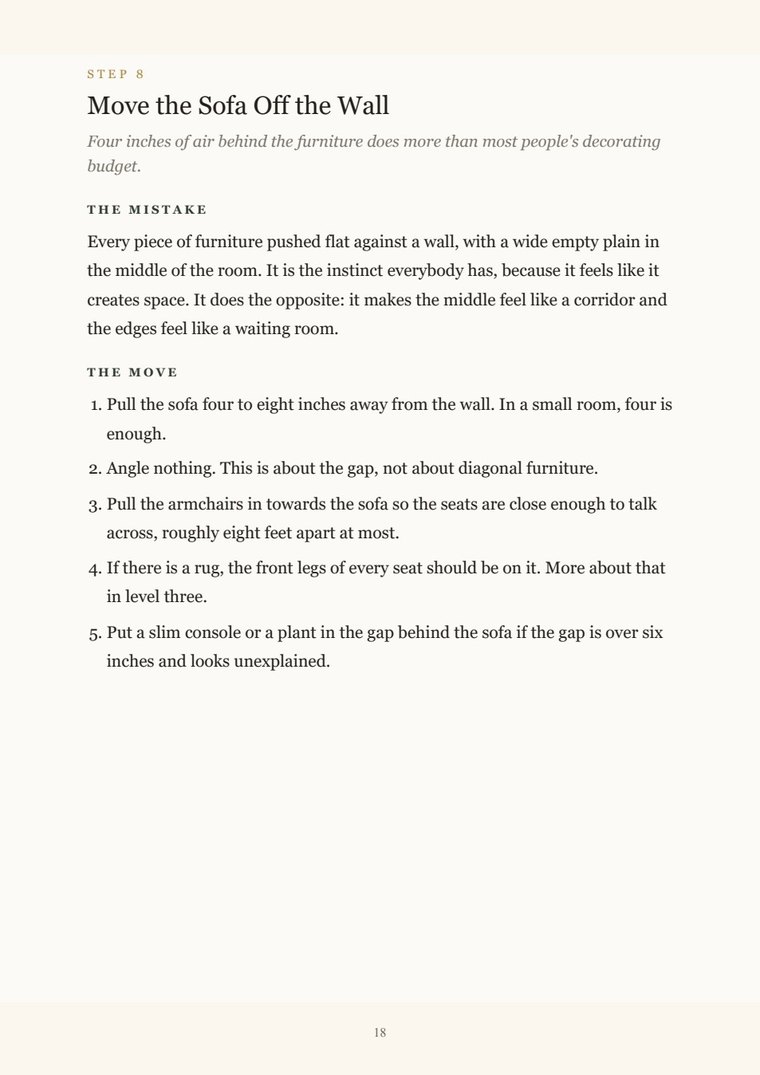
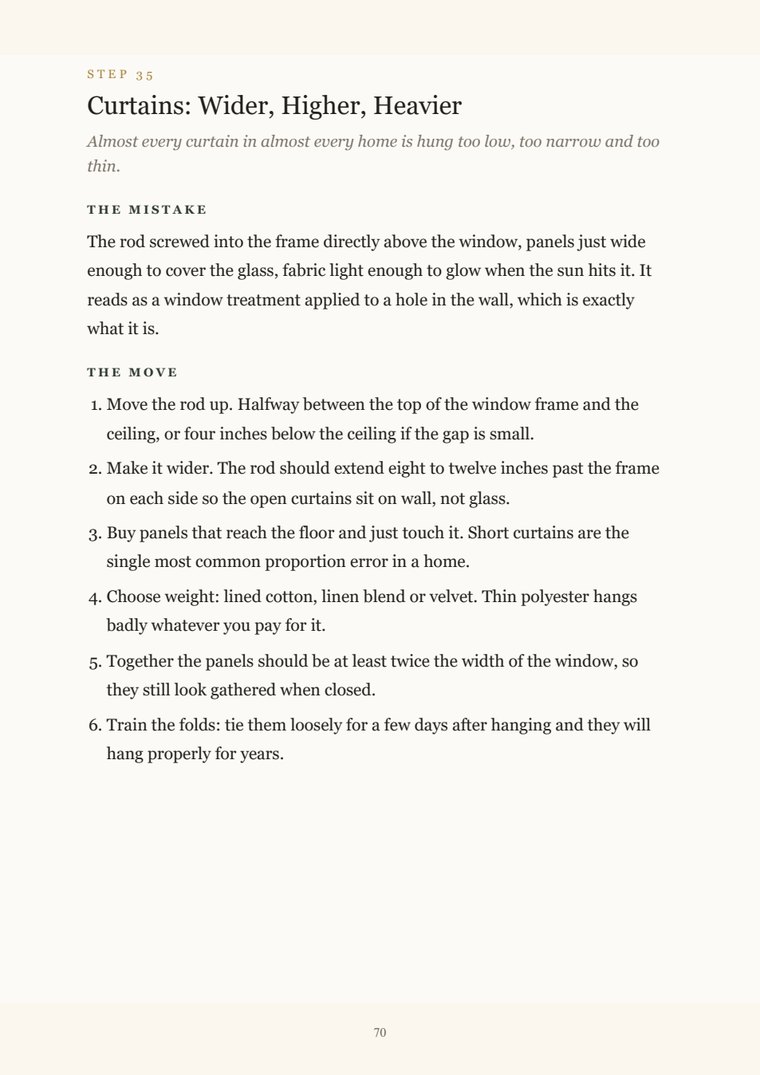
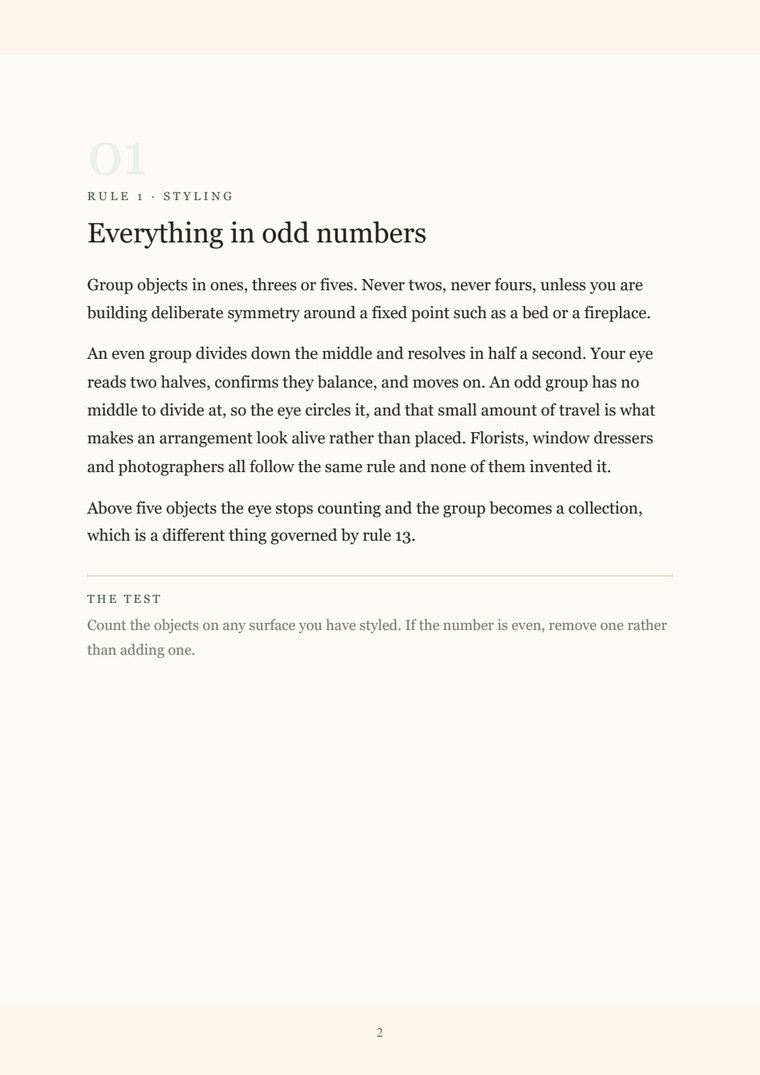
completely learnable and almost never written down: odd numbers, three
heights, one metal per sightline, fifty-seven inches, 2700 kelvin, a third of
every surface left clear.
None of it is a secret and none of it is expensive. It is invisible, in the
way grammar is invisible. Nobody walks into a room and admires the gap between
the curtain rod and the ceiling. They walk in, decide the room feels good, and
cannot tell you why.
That is what these two books contain. Not a style to copy, and not a
shopping list. The mechanical layer underneath taste, so that whatever you
already like starts looking the way it should.
Your home is not cheap. It is badly styled, and that is a much
cheaper problem to fix.
Questions
Do I need both books?
No. The Architect's Eye works alone and is the one to start with, because
it tells you what to do first. The Rulebook is the reference underneath it,
and it is most useful once you have a specific room that feels wrong. The
bundle exists because most people end up wanting both.
Is this a physical book?
No, both are PDFs you download the moment you pay. They work on a phone,
a tablet or a computer, and any page can be printed.
I rent. Is any of this useful?
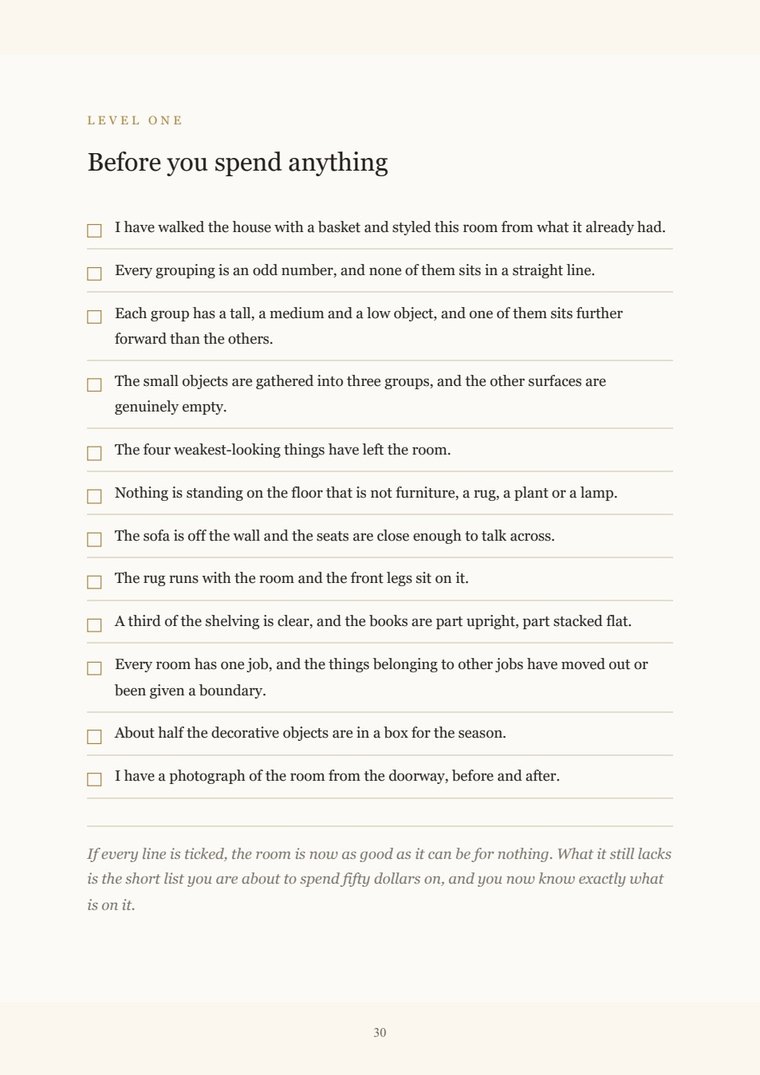
Most of it. Level one costs nothing and changes nothing permanent, level
two is objects you take with you, and a large part of levels four and five
is arrangement rather than alteration. The painting and hardware steps are
the ones to check with your landlord.
Do I have to spend money to use this?
The first level is free by design, and it is the one that makes the rest
work. The whole of the second level comes to under fifty dollars. Nothing in
the books assumes a renovation budget.
What if I do not like them?
Ask for a refund within seven days and you get it back. No form to fill
in and no explanation needed.